
Introduction to Anti-Inflammatory Turmeric Ginger Chicken Soup
When it comes to choosing meals that boost your health and enhance your well-being, anti-inflammatory ingredients take center stage. This is where our delicious anti-inflammatory turmeric ginger chicken soup comes into play. Not only is it flavorful and comforting, but the ingredients work together to help combat inflammation in the body. Did you know that chronic inflammation can lead to serious health issues? Incorporating anti-inflammatory foods into your diet can support a much healthier lifestyle.
Why Choose Anti-Inflammatory Ingredients?
Using ingredients like turmeric and ginger in your cooking doesn't just add amazing flavor; these spices are renowned for their powerful anti-inflammatory properties. Turmeric contains an active compound called curcumin, which has been shown to reduce inflammation and may even act as a natural pain reliever. Similarly, ginger is packed with antioxidants and has traditionally been used to alleviate pain and digestive issues.
Incorporating these ingredients into a cozy soup not only nurtures your body but also your soul. Whether you're feeling under the weather or just want something that warms you from the inside out, this anti-inflammatory turmeric ginger chicken soup is the perfect choice. Plus, with its simple preparation and nourishing ingredients, it's ideal for meal prep or a quick weeknight dinner. You’ll not only enjoy its delicious taste but also its health benefits, making it a must-have recipe in your kitchen repertoire.
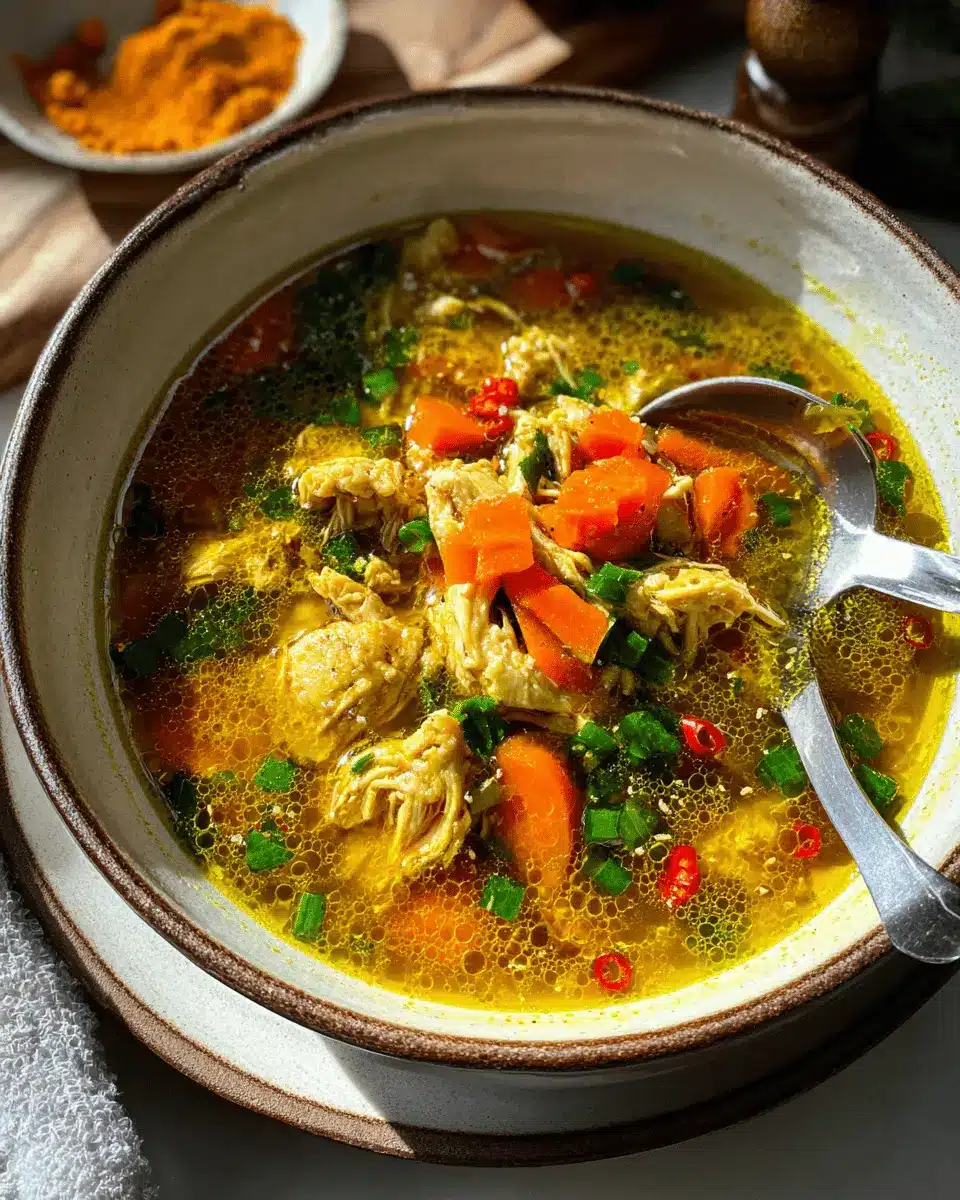
Ingredients for Anti-Inflammatory Turmeric Ginger Chicken Soup
Essential ingredients for a wholesome soup
To craft the delightful anti-inflammatory turmeric ginger chicken soup, you'll need a selection of both nutritious and flavorful ingredients:
- Olive oil: A healthy fat that enhances the flavor and provides beneficial antioxidants.
- Onion and garlic: These allium veggies not only add depth but also bring anti-inflammatory properties.
- Carrots: Packed with beta-carotene, they offer natural sweetness, complementing the spices beautifully.
- Turmeric and ginger: The stars of the show! Both are renowned for their anti-inflammatory effects.
- Chicken broth: Look for a low-sodium option for a heartier base, or consider homemade for extra warmth.
- Creamy coconut milk: Adds richness and a subtle sweetness, making the soup incredibly comforting.
- Chicken thighs or breasts: Juicy and tender, these provide a protein boost that holds the meal together.
- Frozen peas: A vibrant and easy addition to enhance texture and nutrition.
Optional add-ins for customization
Feel free to get creative! Here are some optional add-ins to customize your anti-inflammatory turmeric ginger chicken soup:
- Vegetables: Incorporate chopped celery, leeks, or whatever seasonal veggies you have on hand.
- Grains or noodles: Stir in some cooked rice or whole-grain noodles for added heartiness.
- Herbs: Fresh herbs like thyme or cilantro can elevate the flavor profile even further.
Make this soup your own with these simple additions, and you'll enjoy a nourishing meal that warms both body and soul!
Step-by-step Preparation of Anti-Inflammatory Turmeric Ginger Chicken Soup
Sauté the Aromatics
To kick off your anti-inflammatory turmeric ginger chicken soup, start by heating ¼ cup of olive oil in a large soup pot over medium heat. Toss in diced onions, thinly sliced carrots, and minced garlic. Season with a bit of sea salt. Allow these aromatics to sauté for about 8 to 10 minutes, stirring occasionally, until they soften and begin to caramelize. This step is crucial as it builds a flavor base that will make your soup irresistible. Remember, the more fragrant your kitchen becomes, the better your soup will taste!
Add the Spices
Once the aromatics are ready, it’s time to amp up the flavor with spices. Sprinkle in 1 teaspoon each of turmeric, ground ginger, and garlic powder. Stir them in for another 2 to 3 minutes, allowing the spices to release their natural aromas. These anti-inflammatory powerhouses not only taste amazing but also provide numerous health benefits. Turmeric, with its active compound curcumin, is known for its anti-inflammatory properties, making it a wonderful addition to your health routine.
Combine Broth, Chicken, and Coconut Milk
Next, pour in 6 cups of chicken broth and 2 cups of creamy coconut milk. Don't forget to add your boneless skinless chicken thighs or breasts (around 1.25 lbs). As you add these ingredients, use a wooden spoon to scrape up any delicious bits stuck to the bottom of the pot. This is flavor town right there! Bring everything to a bare simmer—the gentle heat helps maintain the silky texture of the coconut milk.
Cook the Chicken and Vegetables
Now, make sure the chicken is fully submerged in the broth and cover the pot partially. Let it simmer on low for about 15 to 20 minutes. During this time, the chicken will become tender, and the vegetables will cook properly. A gentle simmer is key here; boiling too vigorously can cause the coconut milk to split, which is something we want to avoid for that perfect creamy finish.
Shred the Chicken and Finish the Soup
After the chicken is cooked, carefully remove it from the pot and place it on a cutting board. Once it cools slightly, shred it using two forks, or cut it into bite-sized pieces—whatever suits your fancy! Return the chicken back to the pot along with 1.5 cups of frozen peas and minced fresh parsley. Allow it all to come back to a slow simmer for another 5 minutes to warm through.
Season to taste with extra salt and pepper, then serve your anti-inflammatory turmeric ginger chicken soup either on its own or with hearty rice, noodles, or even some buttered toast. Enjoy every warm, comforting spoonful! This recipe is perfect for meal prep; feel free to freeze a batch for those busy days.
For additional recipes and tips on boosting your health, check out resources like Healthline or WebMD for credible information.
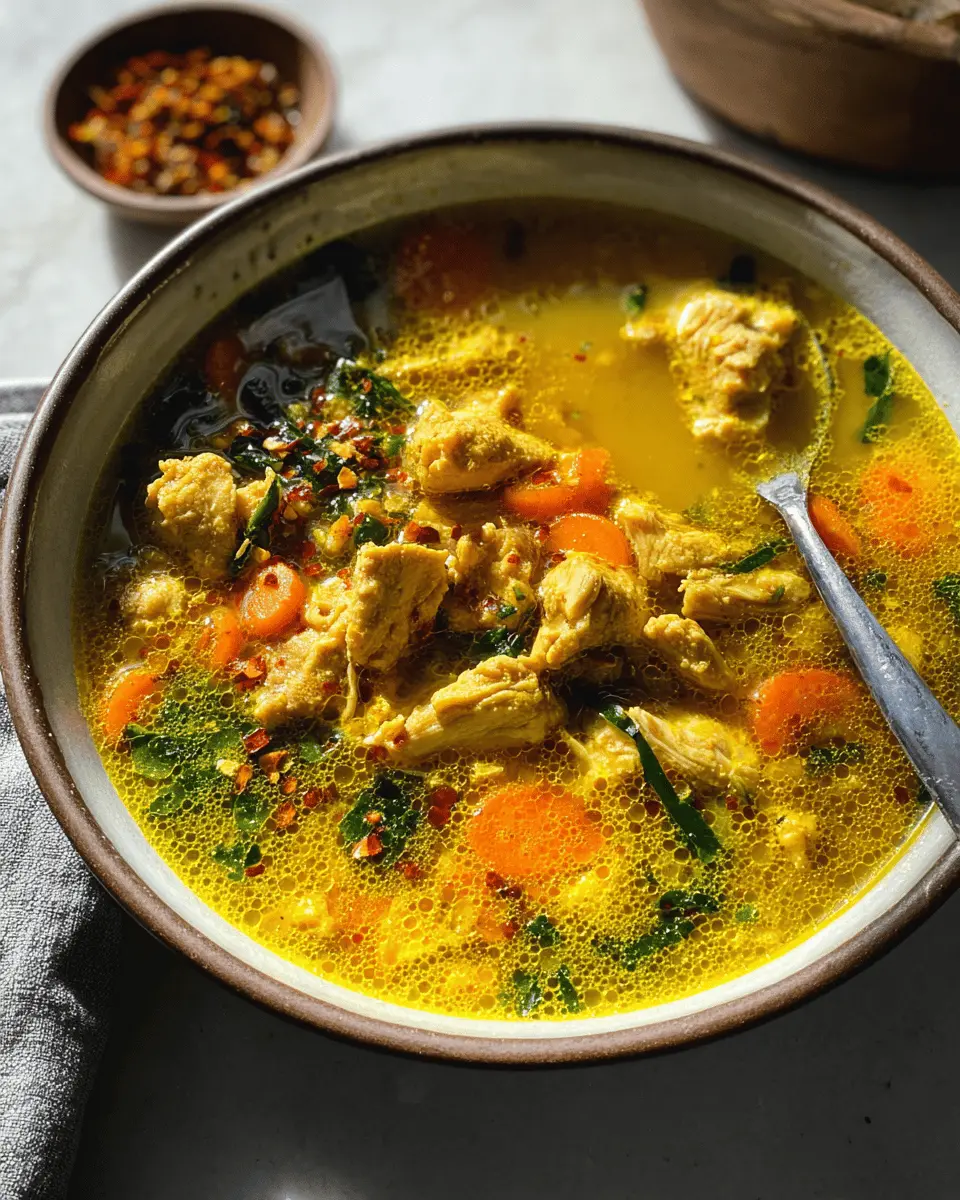
Variations on Anti-Inflammatory Turmeric Ginger Chicken Soup
Vegetarian Version with Chickpeas
If you're looking to enjoy a meat-free take on anti-inflammatory turmeric ginger chicken soup, why not swap in chickpeas? They’re protein-rich and add a delightful creaminess. Simply replace the chicken with 1 can of drained and rinsed chickpeas. Adjust the cooking time so the chickpeas heat through. You might also want to squeeze in some lemon juice for an extra zing!
International Twists with Different Spices
Embrace a global flair by adding your favorite spices. For a Thai twist, consider using lemongrass and lime leaves, or even a splash of fish sauce for depth. Craving some Indian vibes? Toss in garam masala along with your turmeric for an aromatic kick. Feel free to experiment with cumin or coriander to keep things exciting. The beauty of this anti-inflammatory turmeric ginger chicken soup lies in its adaptability!
Cooking Tips and Notes for Anti-Inflammatory Turmeric Ginger Chicken Soup
Key Techniques for Perfecting the Soup
To achieve the best anti-inflammatory turmeric ginger chicken soup, consider these essential techniques:
- Sautéing Aromatics: Always sauté the onions, garlic, and carrots until they’re tender and aromatic. This step builds a rich flavor base that enhances the overall soup.
- Gentle Simmering: Avoid boiling vigorously when adding coconut milk to prevent it from splitting. A gentle simmer allows the flavors to meld beautifully without compromising texture.
Storage and Reheating Tips
- Fridge Storage: Your soup can stay fresh in the fridge for up to 5 days — just keep it in an airtight container.
- Freezing: For longer enjoyment, freeze individual portions for up to 2 months. Label your containers with the date so you know when to enjoy them.
- Reheating: When reheating, do so gently on the stove or in the microwave, adding a splash of broth to maintain creaminess. Remember to stir well!
These tips will help ensure your anti-inflammatory turmeric ginger chicken soup is always delicious!
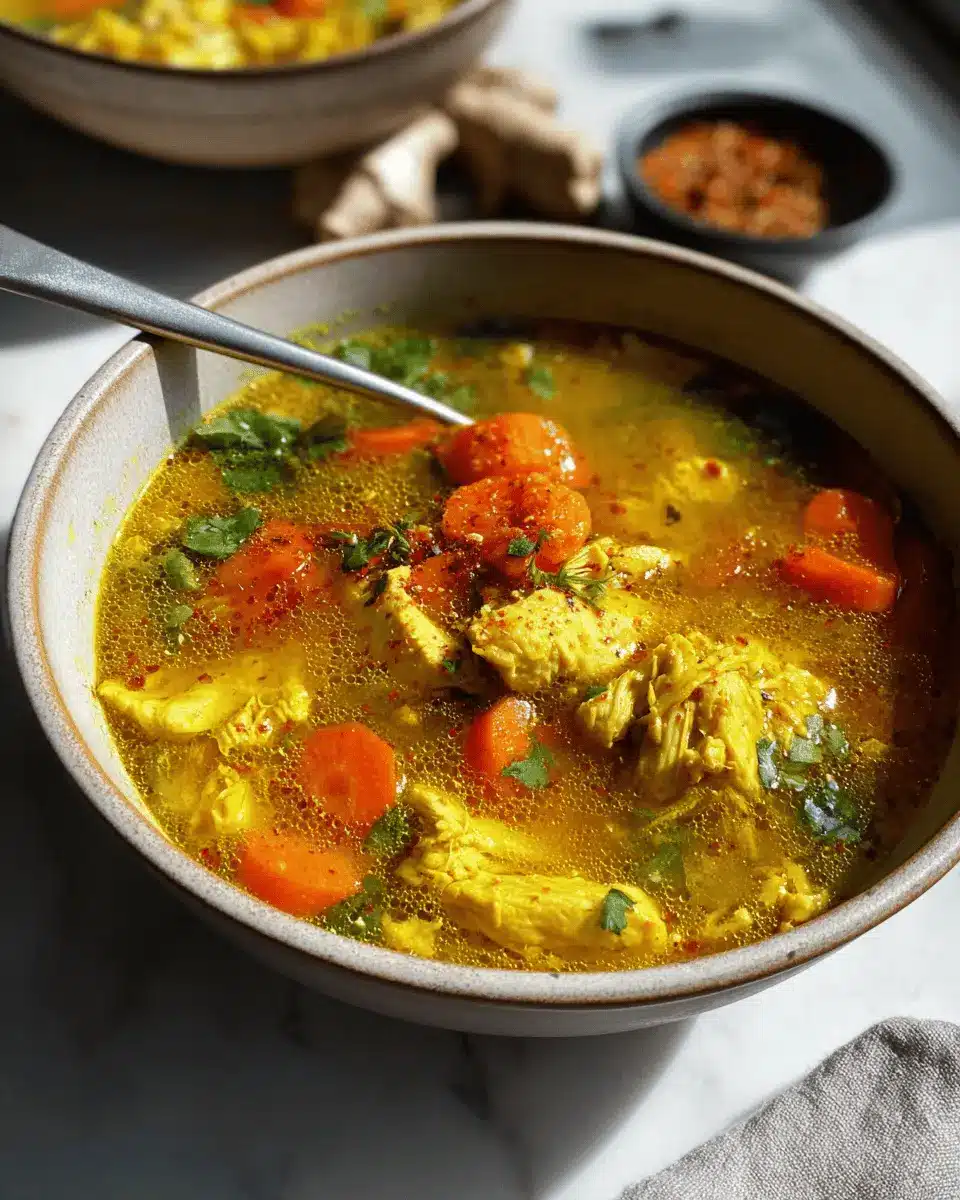
Serving Suggestions for Anti-Inflammatory Turmeric Ginger Chicken Soup
Complementary Sides and Garnishes
To elevate your anti-inflammatory turmeric ginger chicken soup, consider serving it with:
- Warm whole-grain bread or gluten-free options for dipping.
- A side salad with refreshing ingredients like arugula, cucumber, and a zesty lemon vinaigrette.
- Additional herbs such as cilantro or mint sprinkled atop for a burst of freshness.
Pairing Ideas for a Complete Meal
To create a hearty, wholesome meal with your soup, think about:
- Quinoa or brown rice for added fiber and nutrients; they absorb the flavors beautifully!
- Roasted veggies, like sweet potatoes or Brussels sprouts, to complement the soup's warmth.
- Herbal tea to sip alongside your meal, enhancing the calming benefits of the soup.
These simple pairings can transform your anti-inflammatory turmeric ginger chicken soup into a delightful dining experience!
Time Breakdown for Anti-Inflammatory Turmeric Ginger Chicken Soup
Planning to whip up this nourishing anti-inflammatory turmeric ginger chicken soup? Here’s a handy breakdown of how long each step will take, so you can easily fit it into your busy schedule.
Preparation Time
Get everything ready with a quick prep time of just 10 minutes. Chop those veggies and gather your ingredients, and you’re all set to go!
Cooking Time
Let the flavors come together in about 35 minutes. This includes simmering the chicken and veggies to perfection, ensuring each bite is packed with goodness.
Total Time
In just 45 minutes, you’ll have a warm, comforting bowl of soup that’s not only delicious but also great for your health. Perfect for a cozy night in or a nourishing meal prep!
Feel free to explore more about the health benefits of turmeric in this article and see how it can complement your wellness journey!
Nutritional Facts for Anti-Inflammatory Turmeric Ginger Chicken Soup
Calories per serving
This hearty bowl of anti-inflammatory turmeric ginger chicken soup contains approximately 350-400 calories per serving, making it a satisfying yet light option for lunch or dinner.
Key nutrients
Each serving boasts an array of essential nutrients, including:
- Protein: Chicken provides lean protein essential for muscle repair.
- Vitamins: Carrots and parsley contribute vitamins A, C, and K.
- Minerals: Turmeric contains curcumin, which has antioxidant properties.
- Healthy Fats: Coconut milk adds healthy fats, making this soup creamy and delicious.
Health benefits
This warming soup is not just tasty; it’s packed with health benefits:
- Anti-inflammatory properties: Turmeric and ginger work wonders in reducing inflammation.
- Immunity support: The garlic and onions help enhance your immune system.
- Digestive aid: Ginger is known for its ability to promote healthy digestion.
For more detailed insights into the health benefits of turmeric and ginger, you might want to check out sources like Healthline or WebMD. Enjoy this anti-inflammatory turmeric ginger chicken soup as part of a well-balanced diet, and savor the warmth it brings!
FAQs about Anti-Inflammatory Turmeric Ginger Chicken Soup
Can I substitute chicken with another protein?
Absolutely! If you're looking to switch it up, consider using turkey, which is leaner yet packed with flavor. Vegetarian options like tofu or chickpeas can also work well, adding protein without sacrificing goodness.
How do I adjust the spice level?
To customize the spice level of your anti-inflammatory turmeric ginger chicken soup, simply adjust the amount of turmeric and ginger. For a milder flavor, use less. On the flip side, if you love it spicy, try adding a pinch of cayenne pepper or red pepper flakes. Start small and taste as you go!
What other vegetables can I add?
Get creative with veggies! This soup is super versatile. Consider adding spinach, kale, or even zucchini for extra nutrients. You can also toss in whatever veggies you have on hand, like celery or leeks, for added texture and flavor. Each addition enhances the soup's nourishing qualities, making every bowl a comforting delight!
Conclusion on Anti-Inflammatory Turmeric Ginger Chicken Soup
Creating this anti-inflammatory turmeric ginger chicken soup is a delightful way to nourish your body and soothe your spirit. Packed with wholesome ingredients, it’s not just a comforting dish but also a great addition to your meal prep routine. Store leftovers in the fridge or freezer for a quick future meal! Enjoy!

Anti-inflammatory Turmeric Ginger Chicken Soup
Equipment
- large soup pot
Ingredients
Oils
- ¼ cup olive oil See URL for purchase
Vegetables
- 1 medium white onion, diced
- 3 large carrots, peeled and thinly sliced
- 3 clove garlic, minced
Spices
- 1 teaspoon turmeric
- 1 teaspoon ground ginger
- 1 teaspoon garlic powder
- sea salt and black pepper to taste
Liquids
- 6 cups chicken broth See URL for purchase
- 2 cups creamy coconut milk Doesn't need to be from a can
Protein
- 1 ¼ lbs boneless skinless chicken thighs or breasts
Fruits and Vegetables
- 1 ½ cups frozen peas
- 1 tablespoon fresh parsley, minced
Optional Ingredients
- any other veggies like chopped celery, leeks or anything else you may have on hand
- rice or noodles for serving
Instructions
Cooking Instructions
- Heat olive oil over medium heat in a large soup pot. Add onions, garlic, carrots, sea salt and sauté, stirring occasionally, until soft and starting to caramelize, for 8 – 10 minutes.
- Add in turmeric, garlic powder and ground ginger and continue to sauté for another 2-3 minutes, stirring frequently, until spices are fragrant.
- Add broth, coconut milk, and raw chicken to the pot, scraping up any stuck-on bits, and bring to a bare simmer.
- Make sure the chicken is submerged beneath the broth and partially cover. Simmer on low until the chicken is cooked through and veggies are tender – about 15-20 minutes.
- Make sure not to boil the soup too vigorously to prevent the coconut milk from splitting.
- Take off the lid from the soup and remove the chicken to a cutting board and cool slightly.
- Cut into bite sized pieces or shred using two forks. Return chicken to the pot along with frozen peas and fresh parsley. Bring back to a slow simmer and allow chicken to warm through and peas to cook – about 5 minutes.
- Season to taste with salt and pepper and serve garnished with some extra parsley if desired. Enjoy as is or with rice, noodles or some buttered toast if you are me.



Leave a Reply